

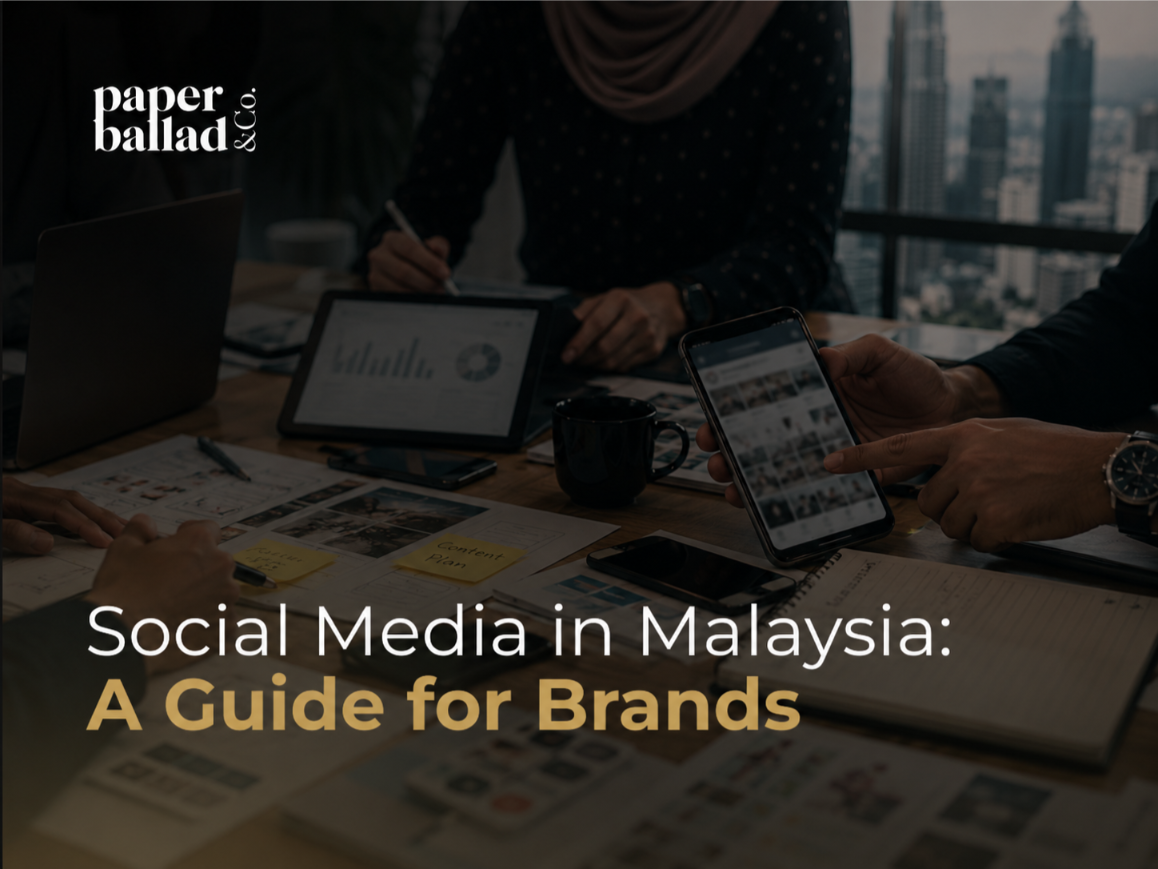

There is no shortage of content on social media in Malaysia.
Every brand is posting, trying to stay visible.
Every platform is full of formats that experts say will work but mindlessly posting more won’t automatically build stronger brands.
Having access to an audience isn’t the problem.
In January 2025, research shows that Malaysia recorded 25.1 million social media user identities, representing 70.2% of the total population. Brand should ask “Is my brand memorable enough to matter?“. What matters is what people actually believe of your brand after seeing you again and again.
Do they trust you more?
Do they understand you better?
Do they remember you at all?
Being visible ≠ Being recognized.
A brand can appear on someone’s feed every week and still mean very little to them.
Another brand can appear less often but communicate with enough clarity and consistency that people begin to associate it with trust, taste, quality, confidence, expertise, or whatever the brand is trying to own.
Social media is more than just mindless posting. It’s what people think about your brand before they even interact with you.
Social Media in Malaysia Is No Longer Just a Marketing Channel
For many Malaysians, social media has become a major part of the buying journey. Local internet usage research by MCMC also reinforces how digital behavior in Malaysia continues to shape how people communicate, search, and interact online.
People discover brands on TikTok, Shopee, and Facebook. They validate them on Instagram and check reviews on Google. They compare alternatives on websites, marketplaces, Facebook groups, Threads, and even WhatsApp conversations. Buyers often decide whether a business feels trustworthy before they ever make an enquiry.
Social media in Malaysia is where people quietly form opinions. Where a weak social media presence can make a capable business look inactive, where an inconsistent page can make a premium brand feel unclear and where a feed filled only with promotions can make a business look desperate instead of desirable.
None of this is always said out loud, but perception works quietly.
In today’s marketing landscape, what people feel before they engage with your brand matters just as much as what they think after they do.
The Modern Malaysian Customer Journey

People often mistaken that each platform works in isolation.
Google’s consumer insight resources also point to how modern buying journeys have become less linear, with people moving between scrolling, searching, streaming, and shopping before making decisions. Customers may only enquire days later but by then, several small impressions have already shaped their decision.
A post may create awareness.
A profile may create trust.
A review may reduce doubt.
A website may confirm credibility.
A WhatsApp conversation may close the gap.
Strong social media strategy builds enough trust across enough touchpoints for someone to feel comfortable taking the next step.
|
Stage |
What People Often Do |
What Brands Should Understand |
|
Discover |
See a reel, ad, post, or recommendation |
First impressions happen fast |
|
Validate |
Check Instagram, TikTok, reviews, website |
Trust is built across touchpoints |
|
Compare |
Look at competitors or alternatives |
Clarity helps reduce doubt |
|
Decide |
DM, WhatsApp, purchase, book, or enquire |
Familiarity lowers resistance |
Why Some Brands Feel Bigger Than They Are
It is no accident that some brands feel established before they actually are.
It usually happens because their digital presence communicates one clear idea repeatedly.
Their visuals feel consistent.
Their tone is recognisable.
Their content answers what the audience cares about.
Their social media presence gives people enough signals to feel that the brand is active, intentional, and trustworthy.
Many SMEs, property brands, clinics, FMCGs, F&B’s, education providers, lifestyle brands, and professional service companies are not competing only on product or pricing anymore. They are competing on perception.
A brand that looks clear and confident online often earns more trust before the sales conversation begins.
A brand that looks scattered may need to work harder to convince people later.
That is the hidden value of strategic social media – it reduces uncertainty.
A Simple Real-World Example

Picture this, you’re looking for an aesthetic clinic in Kuala Lumpur.
Two clinics appear on Instagram.
The first clinic posts mostly promotions. The treatment names are there, but the page does not explain much.
Their content feel inconsistent, and it’s hard to understand the doctor’s approach, the clinic environment, or what the experience might feel like.
The second clinic posts treatment education, physician explanations, patient journey stories, clinic environment, safety reminders, client testimonials, and realistic expectations.
The page feels considered and up to date.
Which clinic feels easier to trust?
Probably the second, right?
The decision is rarely based on one post. It is shaped by the small signals that reduce doubt: clarity, consistency, expertise, and care.
That is how social media works in higher-trust industries. It helps people feel informed before they feel ready.
What Malaysian Brands Often Get Wrong About Social Media
A lot of brands treat social media like a checklist.
✔️ Post three times a week.
✔️ Join trends.
✔️ Run ads.
✔️ Show product.
🔁 Repeat.
The page looks active, but the brand itself doesn’t become more meaningful.
This is where social media in Malaysia often becomes busy but not strategic.
|
Common Belief |
Better Question |
|
We need more followers |
What do we want people to remember us for? |
|
We need to go viral |
Will this build the right perception? |
|
We need to post daily |
Are we posting with direction? |
|
We need more reach |
Are we earning trust from the right audience? |
|
We need better content |
Do we have a clear brand position first? |
The problem is usually the lack of a clear point of view.
If a brand does not know what it wants to mean to people, content becomes scattered. Every post may look fine on its own, but none of it builds together.
Brands need to first need to understand what a brand really is and why it matters, because social media only works when it is reinforcing the right reputation in people’s minds.
Platform Strategy Is Not Just Resizing Content

One common mistake is treating every platform the same way and using every platform with the same mindset.
• Make one campaign.
• Resize it.
• Post everywhere.
Someone scrolling on TikTok does not behave the same way as someone checking posts on LinkedIn.
|
Platform |
What It Often Supports |
|
TikTok |
Discovery, personality, entertainment, quick education |
|
|
Visual identity, trust, lifestyle, social proof |
|
|
Community, promotions, events, older demographics |
|
|
Thought leadership, B2B credibility, professional trust |
|
YouTube |
Deeper education, reviews, long-form storytelling |
|
Xiaohongshu / Lemon8 |
Lifestyle research, visual discovery, social commerce |
This does not mean every brand needs to be posting everywhere however, it does means every platform should have a purpose.
A premium property brand should not behave like a meme page simply because short-form content is popular.
A professional service firm should not use LinkedIn like a press release board.
A lifestyle brand should not treat Instagram like a product catalogue with captions.
Good platform strategy begins with user intent.
Why is the audience there?
What are they open to seeing?
How to make them pause?
What would make them trust you more?
Once a brand understands that, content becomes sharper.
From there, the next step is understanding which social media marketing strategies can turn platform clarity into stronger visibility, trust, and growth.
The Role of Social Media in Brand Trust
Trust is not built through one post.
It is built through repeated evidence.
Every time someone sees your brand, they are gathering small signals:
- Does this brand understand people like me?
- Does it look active?
- Does it communicate clearly?
- Does it seem credible?
- Does it feel consistent?
- Does it make sense for me to choose them?
This is where social media connects closely with user experience.
A confusing Instagram page creates friction.
An unclear bio creates hesitation.
A feed with no consistent direction makes people work harder to understand what the brand offers.
And when people have to work too hard, many simply leave.
That is why good social media is not just content. It is part of the customer journey.
Internal Link: https://paperballad.com/ux-strategy-and-content-marketing/ (UX strategy and content marketing)
What Brands Should Focus On Instead
If social media in Malaysia is becoming more competitive, the answer is not always to post more but to become clearer.

1. Define what you want to be remembered for
Before planning content, decide what the brand should mean to people.
Is it:
Trust?
Expertise?
Taste?
Convenience?
Confidence?
Value?
A brand cannot own everything equally.
Strong content begins with a clear centre.
2. Build content around audience psychology
Most brands talk about what they want to say.
Better brands think about what the audience needs to believe before they take action.
What are they unsure about?
How to make them trust you?
What would make them feel understood?
How to make your brand easier to choose?
A simple way to think about this is to translate features into meaning.
Apple did not sell the iPod as “5GB of storage.” It sold it as “1,000 songs in your pocket.”
The feature was storage, the meaning was freedom, convenience, and abundance.
That is what good social media content does. It helps people understand why something matters to them faster.
3. Keep the visual and verbal identity consistent
Recognition needs repetition.
This doesn’t mean every post should look identical but the brand should feel like it comes from the same mind.
The tone, visual rhythm, message, brand colours and point of view should be built together.
4. Treat metrics as learning, not decoration
Data like reach, impressions, engagement, saves, clicks, and enquiries are useful but numbers only matter when they tell you what to improve.
A post with high reach but poor recall may not build the brand.
A post with fewer views but strong saves, shares, or meaningful comments may say more about audience trust.
The best reports do not just show what happened, they explain what it means.
So, Is Social Media Still Worth It for Brands in Malaysia?
Yes.
But only when brands stop treating it as a content treadmill.
Social media is still one of the most powerful tools for building visibility, trust, and familiarity in Malaysia. But it works best when there is strategy behind it.
The brands that win are not always the ones posting the most.
They are the ones with a clearer sense of:
- who they are speaking to
- what they want to be known for
- how they want to make people feel
- what perception they are building over time
That is when social media becomes a system for shaping demand.
Where Paperballad Comes In

At Paperballad&Co., we look at social media as part of a larger brand experience.
We do the strategic work before creating content.
Studying the market, the audience, the brand position, and the perception that needs to shift.
We ask what people should understand after encountering your brand repeatedly, and what needs to happen for them to trust you enough to choose you because the goal is not to keep a page active. The goal is to build a brand people recognise, trust, and return to.
If this resonated, it is probably because you already sense that your social media presence could be doing more.
• Good content with decent numbers, but the brand is not growing.
• Consistent posting, but weak recognition.
• Campaigns running, but unclear trust.
That gap has a name. And we know how to close it.

Book a discovery call with Paperballad&Co.
We’ll take the time to understand your brand, your market, and what it would actually take to make people choose you. No templates. No generic audits. Just honest strategic thinking from a team that’s done this before.
Frequently Asked Questions
What does social media in Malaysia mean for brands?
Social media in Malaysia plays a major role in how consumers discover, evaluate, and trust brands. It is no longer just a place for announcements or promotions. It has become part of the customer journey and influences how people perceive a business before they enquire or buy.
Why is social media important for Malaysian businesses?
Social media helps Malaysian businesses build visibility, trust, familiarity, and brand recall. When used strategically, it can reduce uncertainty and make it easier for customers to understand why they should choose one brand over another.
Which social media platforms matter most in Malaysia?
The most relevant platforms depend on the audience and business category. Instagram, TikTok, Facebook, LinkedIn, YouTube, Xiaohongshu, and Lemon8 can all be useful, but each platform serves a different user behavior. The key is not to be everywhere, but to be intentional where it matters.
How can brands improve their social media strategy?
Brands can improve their social media strategy by clarifying their positioning, understanding audience psychology, creating platform-native content, maintaining consistency, and measuring what actually builds trust, not just what gets views.
Should businesses hire a social media marketing agency?
Businesses may benefit from hiring a social media marketing agency when they need clearer strategy, stronger creative direction, consistent execution, and better alignment between content and business goals. The right agency should help build recognition, not just produce posts.






Comments (2)
Pingback: Brand Awareness: 10 Essential Social Media Marketing Techniques
Pingback: The Ultimate Guide to Marketing Strategy in Malaysia
Comments are closed.