


There is a lot of talk about strategy in Malaysia. Brand strategy. Marketing strategy. Content strategy. Campaign strategy. Digital strategy and now, UX strategy.
On the surface, it sounds like another industry term. Another label to add into a presentation deck. Another phrase that feels important, but not always clear.
For many people, UX still means app design, website layouts, wireframes, buttons, user flows, or whether a digital interface is easy to use.
While that might be a part of UX, it is not the whole thing. UX strategy is more than simply knowing how something looks or works, it’s about understanding what people need, expect, feel and believe before they act.
That difference is important for Malaysian brands as many companies are already producing content, running campaigns, updating visuals, advertising and posting on social media. The effort’s there. The activity is in place. The numbers may seem big but they don’t always tell you where the brand should go.
People see the content, but they don’t get to know the brand better.
• They touch but they do not remember.
• They click but they don’t trust to choose.
• They click, but they do not trust enough to choose.
That is what we call a UX strategy problem, not a design problem.
What Is UX Strategy?
UX strategy is the process of understanding the audience deeply enough to shape better decisions across branding, content, marketing, and customer experience.
It asks questions like:
- What does the audience actually need?
- What are they unsure about?
- What do they need to believe before they act?
- What creates trust?
- What creates hesitation?
- What makes a brand easier to choose?
A lot of brands begin with what they want to say.
UX strategy begins with what the audience needs to understand.
It changes the way a brand writes.
It changes the way a website is structured.
It changes the way content is planned.
It changes the way campaigns are built.
It changes how the customer feels before they ever make an enquiry.
This is why UX strategy should not be limited to websites or apps. Every touchpoint creates an experience. A social media post creates an experience. A landing page creates an experience. A WhatsApp reply creates an experience. A product description creates an experience.
When those touchpoints are unclear, the customer works harder.
When people have to work too hard, many simply leave.
UX Strategy Is Not Just UI/UX Design
One of the biggest misunderstandings around UX strategy in Malaysia is that it gets treated as a design function only.
UI/UX design is important. It helps make digital products easier to use, navigate, and understand.
But UX strategy goes further.
| Term | What It Usually Focuses On |
| UI Design | How something looks visually |
| UX Design | How something works for the user |
| UX Strategy | Why the experience should be built that way in the first place |
UI asks, “Is this visually clear?”
UX asks, “Can people use this easily?”
UX strategy asks, “Are we solving the right problem for the right audience in the right way?”
That last question is where many brands struggle because a brand can have good visuals and still feel unclear.
A campaign can look polished and still fail to connect.
A website can be functional and still not build trust.
A content calendar can be consistent and still not change what people believe about the brand.
Good execution matters.
But execution without understanding is decoration.
► Find out more about FMCG Company’s UX Strategy & Content Marketing here.
Why UX Strategy Matters for Malaysian Brands
Malaysia is a competitive market.
Customers have choices. A lot of them.
Based on consumer behavior insights across industries like property, healthcare, education, F&B, FMCG, retail, beauty, hospitality, and professional services, the challenge is no longer simply being visible.
The harder challenge is becoming understandable.
People do not always choose the best brand.
They choose the brand that feels clearer, safer, more relevant, more trustworthy, or easier to say yes to.
That is what UX strategy helps with.
It reduces confusion before it becomes hesitation.
It identifies what people need to know before they trust.
It turns scattered communication into a more intentional brand experience.
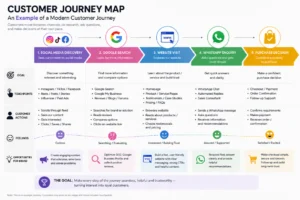
A Malaysian customer may discover your brand through Instagram, check reviews on Google, visit your website, compare you with competitors, and then message you on WhatsApp. By the time they enquire, several small experiences have already shaped their decision.
A post may create awareness.
A website may confirm credibility.
A review may reduce doubt.
A clear message may make the next step feel easier.
UX strategy connects these moments so the brand does not feel fragmented.
► Find our how a Brand Strategist and What a Best Strategist Award Means for Brands.
The Problem With Starting From Content First
Many brands start with content.
What should we post this month?
What campaign should we run?
What reel should we make?
What trend should we join?
These are useful questions, but they are not the first questions.
Before content, there should be clarity.
A brand needs to understand:
- what it wants to be known for
- what the audience already believes
- what the audience does not understand yet
- what perception needs to shift
- what trust barriers exist
- what makes the brand easier to choose
Without that, content becomes output.
A calendar gets filled.
A report gets generated.
But the brand does not become more meaningful.
This is why some brands can post consistently and still feel forgettable.
The problem is not always the frequency.
Sometimes, the problem is that every post is answering a question the audience was never asking.
► Find out what a brand really is in Malaysia.
A Simple Real-World Example
Imagine two clinics in Kuala Lumpur offering the same treatment.
The first clinic focuses on promotions.
The posts are clear enough. The price is visible. The treatment name is there. The design looks acceptable.
But the page does not explain much.
There is little information about the doctor’s approach, safety, patient concerns, realistic expectations, or what the experience feels like.
The second clinic takes a different approach.
It explains the treatment clearly. It answers common fears. It shows the environment. It introduces the physician’s perspective. It talks about aftercare. It helps patients understand what to expect before they make an enquiry.
Which clinic feels easier to trust?
Probably the second.
Not because the treatment is automatically better.
Because the uncertainty is lower.
That is UX strategy at work.
It understands that the customer is not just looking for a service. They are looking for confidence, reassurance, clarity, and a reason to trust.
Once you understand that, the content changes.
The website changes.
The campaign changes.
The entire experience becomes more useful.
What a UX Strategist Actually Does

A UX strategist does not simply decide what a brand should post or how a page should look.
A UX strategist studies the gap between what a business wants to communicate and what the audience actually needs to experience.
That work can include:
| Area | What a UX Strategist Looks At |
| Audience | Needs, fears, motivations, expectations |
| Market | Competitors, category norms, trust gaps |
| Brand | Positioning, perception, differentiation |
| Content | What should be said, why it matters, where it fits |
| Customer Journey | What people experience before taking action |
| Conversion | What creates hesitation or confidence |
In simpler terms, a UX strategist helps brands stop guessing.
Instead of creating based on internal opinions, the brand begins creating around user understanding.
This is where UX strategy becomes powerful for Malaysian businesses.
It gives structure to decisions that often feel subjective.
Why should the website say this?
Why should the content focus on this?
Why should the campaign lead with this message?
Why does this audience care?
A UX strategist helps answer those questions before time, budget, and creative energy are spent in the wrong direction.
UX Strategy and Brand Experience
A brand is not only experienced through its logo, colours, or campaign visuals.
It is experienced through every moment where someone forms an impression.
The first Instagram post they see.
The way your website explains your service.
The clarity of your bio.
The quality of your captions.
The ease of finding information.
The confidence your content gives them.
The tone of your reply.
Every touchpoint either reduces friction or creates more of it.
This is why UX strategy and branding are closely connected.
Branding defines what the business should mean.
UX strategy studies what the audience needs in order to believe it.
A brand may want to be seen as premium.
But does the experience feel premium?
A brand may want to be seen as trustworthy.
But does the content reduce doubt?
A brand may want to be seen as expert.
But does the communication actually educate?
This is where the gap often appears.
Brands say one thing, audiences experience another.
UX strategy helps close that gap.
UX Strategy Before Content Marketing
At Paperballad&Co., we believe content should not begin with topics.
It should begin with understanding.
Most brands talk about what they want to say. Better brands think about what the audience needs to believe before they take action.
What are they unsure about?
What would make them trust you?
What would make them feel understood?
What would make your brand easier to choose?
A simple way to think about this is to translate features into meaning.
Apple did not sell the iPod as “5GB of storage.”
It sold it as “1,000 songs in your pocket.”
The feature was storage.
The meaning was freedom, convenience, and abundance.
That is what good content does. It helps people understand why something matters to them faster.
And that is why UX strategy should come before content marketing.
Because content without user understanding becomes noise.
Content with UX strategy becomes a bridge between what the brand offers and what the audience actually cares about.
► If you’re a brand in Malaysia, read more about how social media helps.
What Malaysian Brands Often Get Wrong
Many brands are not short of effort.
They are short of alignment.
The team is posting.
The ads are running.
The website is live.
The campaign calendar is full.
But the experience still feels scattered.
| Common Problem | What UX Strategy Helps Clarify |
| Content feels random | What the audience needs to understand |
| Website has traffic but weak enquiries | Where users hesitate |
| Campaigns get attention but little trust | What perception needs to shift |
| Brand looks good but feels unclear | What reputation the brand should build |
| Reports show numbers but little learning | What the data actually means |
This is why UX strategy Malaysia should matter to brands that are serious about long-term growth.
The point is not to make everything more complicated.
The point is to make the right things clearer.
When Does a Brand Need UX Strategy?

A brand may need UX strategy when:
- content is consistent, but people do not remember the brand
- ads bring traffic, but enquiries remain weak
- the website looks good, but users still seem unsure
- social media is active, but the brand does not feel clearer
- campaigns get attention, but trust does not grow
- internal teams disagree on what the brand should say
- customers keep asking questions that should already be answered
These are signs of friction.
Not always visual friction.
Often, it is strategic friction.
The audience does not understand enough.
The message does not connect deeply enough.
The journey does not reassure them early enough.
UX strategy helps identify where that friction begins.
► Find out more about Creative Agencies in Malaysia HERE.
Where Paperballad Comes In
At Paperballad&Co., UX strategy is not treated as a design add-on.
It is part of how we build brands, content, and marketing systems from the beginning.
Before we create content, we do the strategic work.
We study the market, the audience, the brand position, and the perception that needs to shift. We ask what people should understand after encountering your brand repeatedly, and what needs to happen for them to trust you enough to choose you.
Because the goal is not to keep a page active.
The goal is to build a brand people recognise, trust, and return to.

If this resonated, it is probably because you already sense that your brand does not need more content first.
It needs clearer thinking.
Good ideas, but weak alignment.
Strong visuals, but unclear relevance.
Consistent campaigns, but little movement in how people perceive you.
That gap has a name.
And we know how to close it.

Book a discovery call with Paperballad&Co.
We’ll take the time to understand your brand, your market, and what it would actually take to make people choose you. No templates. No generic audits. Just honest strategic thinking from a team that’s done this before.
Frequently Asked Questions
What is UX strategy?
UX strategy is the process of understanding user needs, motivations, expectations, and decision-making behaviour so a brand can create better experiences across content, websites, campaigns, and customer touchpoints.
What does UX strategy Malaysia mean?
UX strategy Malaysia refers to applying user-first strategic thinking to Malaysian brands, audiences, and market behaviour. It helps businesses understand what local customers need to feel, believe, and understand before choosing a brand.
Is UX strategy the same as UI/UX design?
No. UI/UX design usually focuses on how a digital interface looks and works. UX strategy focuses on why the experience should be built a certain way, based on audience behaviour, market insight, and business goals.
Why is UX strategy important for brands?
UX strategy helps brands reduce confusion, build trust, improve communication, and create experiences that feel more relevant to their audience. It helps ensure content, websites, and campaigns are built around what users actually need.
When should a business invest in UX strategy?
A business should consider UX strategy when content is active but not building recognition, campaigns are getting attention but not trust, or customers are hesitating because the brand experience feels unclear or disconnected.